
Step into a world where vibrant spices dance on your palate and every bite tells a story steeped in tradition.The Ethiopian vegetarian platter is more than just a meal-it’s a colorful tapestry of flavors, textures, and aromas that celebrate centuries of culinary artistry. From tangy lentils to hearty greens, this dish invites you to explore a harmonious blend of ingredients thoughtfully prepared to nourish both body and soul. Join us as we uncover the rich flavors of Ethiopia’s beloved vegetarian feast, and discover why it has captured the hearts and taste buds of food lovers around the globe.
Discover the rich flavors of an Ethiopian vegetarian platter by diving into the vibrant ingredients and timeless culinary traditions that define this beloved cuisine. Rooted deeply in Ethiopia’s cultural tapestry, Ethiopian vegetarian dishes beautifully marry bold spices, wholesome legumes, and fresh vegetables, all served atop the unmistakable tangy and spongy injera. This meal is not just food-it’s an experience of shared warmth, history, and vibrant taste that will transport your palate to the heart of East Africa.
Prep and Cook Time
- Planning: 30 minutes
- Cooking: 1 hour 15 minutes
- Total Time: 1 hour 45 minutes
Yield
Serves 4 generous portions
Difficulty Level
Medium - but rewarding with a little patience and attention to detail
Ingredients
- For the injera:
- 2 cups teff flour (can substitute with 1 cup teff + 1 cup all-purpose flour)
- 3 cups water
- 1/4 teaspoon active dry yeast (optional for quicker fermentation)
- Pinch of salt
- For the Vegetarian stew (Misir Wot – Spiced Lentils):
- 1 cup red split lentils, rinsed
- 2 tablespoons niter kibbeh (Ethiopian spiced clarified butter) or unsalted butter
- 1 large onion, finely chopped
- 3 cloves garlic, minced
- 1 tablespoon fresh ginger, minced
- 2 tablespoons berbere spice blend
- 1 ½ cups vegetable broth or water
- Salt to taste
- For the Chickpea Salad (Shiro Alicha Variation):
- 1 ½ cups cooked chickpeas
- 2 tablespoons shiro powder (chickpea flour with mild spices) or substitute with chickpea flour
- 1 tablespoon olive oil
- 1 teaspoon turmeric
- 1 medium tomato, chopped
- 1 small onion, diced
- Salt and black pepper to taste
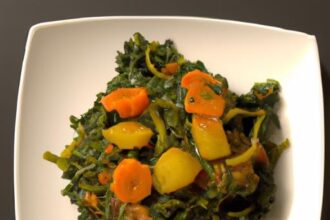
- Additional sides: sautéed collard greens (gomen), spiced cabbage and carrots, fresh tomato salsa
Instructions
- Prepare the Injera batter: Combine teff flour and water in a large bowl, stirring until smooth. Cover with a cloth and leave at room temperature for 48 hours to ferment until slightly bubbly. For faster fermentation, add yeast, mix well, and allow fermenting for 12-18 hours.
- Make the lentil stew (Misir Wot): Heat the niter kibbeh in a saucepan over medium heat. Add onions and sauté until translucent, about 7 minutes, stirring regularly.
- Add the garlic and ginger, cooking for 2 more minutes until fragrant.
- Sprinkle in the berbere spice blend and stir to coat the mixture,cooking for 1-2 minutes to release the aroma.
- Add rinsed lentils and pour in vegetable broth, bring to a boil, then reduce heat and simmer, partially covered, until lentils are soft and stew thickens (about 30-40 minutes). Stir occasionally to prevent sticking.
- Season with salt to taste and set aside.
- Prepare the chickpea salad: In a skillet, warm olive oil over medium heat. Add onion and sauté 3-4 minutes until soft.
- Mix in turmeric and shiro powder, cook for 1 minute, then add chickpeas and tomato. Stir until evenly coated and heated through, about 5 minutes. adjust seasoning with salt and pepper.
- Cook the injera: Preheat a non-stick skillet or specialized injera pan over medium-high heat. Pour a ladleful of batter in the center,swirling quickly to cover the surface thinly,like a crepe. Cover and cook until holes form on the surface and edges lift slightly, about 2-3 minutes. Do not flip. Remove carefully and cool on a clean cloth. Repeat with remaining batter.
Chef’s Notes
- Make ahead: Injera batter improves in flavour with longer fermentation-up to 72 hours if refrigerated.
- Substitutions: If teff flour isn’t available, mix quinoa or rice flour with all-purpose flour, but teff adds the authentic sour flavor.
- Berbere spice: You can buy it pre-made or create your own blend mixing paprika, cayenne, fenugreek, garlic, ginger, and cinnamon.
- Vegan variations: Use oil rather of niter kibbeh or try infused oils with garlic and rosemary.
- Texture tips: Injera batter should be thin but not watery; add small amounts of water if too thick after fermentation.
Serving Suggestions
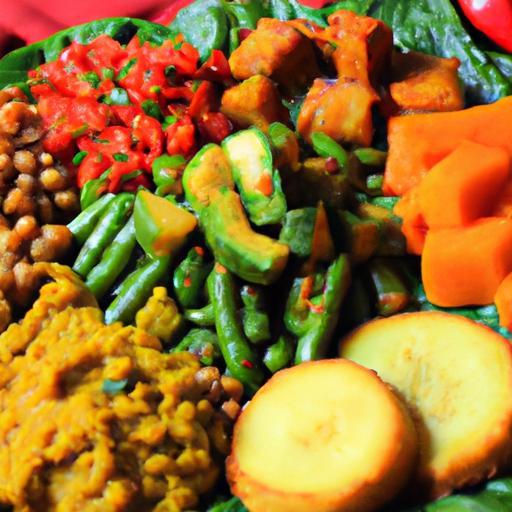
Plate the injera as the base on a large round platter, layering the colorful stews-lentils, chickpeas, sautéed greens, and spiced vegetables-artfully atop. Garnish with fresh cilantro, sliced green chilies, or lemon wedges to brighten the flavors. Encourage sharing by tearing off pieces of injera to scoop up the stews, creating a true communal experience.
| Dish Component | Calories | Protein | Carbs | Fat |
|---|---|---|---|---|
| Injera (1 large piece, 100g) | 150 | 4g | 30g | 1g |
| Misir Wot (1 cup) | 250 | 16g | 40g | 7g |
| Chickpea Salad (1 cup) | 220 | 12g | 35g | 5g |

Explore More Ethiopian Recipes
For a deeper dive into Ethiopian spices and sides, check out our Complete Ethiopian Spice Guide.
To understand more about the nutritional benefits of lentils and legumes, visit this NIH research article.
Q&A
Q&A: Discover the Rich Flavors of an Ethiopian Vegetarian Platter
Q1: What makes Ethiopian vegetarian platters unique?
A1: ethiopian vegetarian platters are a vibrant mosaic of flavors and textures, where each dish tells a story of tradition and community. Unlike typical vegetarian meals, these platters combine a variety of lentils, legumes, vegetables, and spices that envelope your palate in warmth and depth, all served on injera-a tangy, spongy flatbread that acts as both plate and utensil.
Q2: What is the star ingredient in an Ethiopian vegetarian platter?
A2: While there’s no single star, injera definitely steals the show as the foundation. Made from teff flour, injera’s slightly sour taste complements the rich, spicy stews called wats and the fresh vegetable sides perfectly. Together, they form a harmonious balance of flavors distinct to Ethiopian cuisine.
Q3: Which dishes are commonly found on a vegetarian platter?
A3: A customary Ethiopian vegetarian platter often features misir wat (spicy red lentil stew), atkilt wat (cabbage, carrots, and potatoes simmered with mild spices), shiro (a hearty chickpea flour stew), and gomen (collard greens sautéed with garlic and ginger). These are artfully arranged on injera and ready to be shared, reflecting Ethiopian culture’s emphasis on communal dining.
Q4: How spicy are the dishes, and can they be adjusted?
A4: Ethiopian cuisine embraces bold spices like berbere-a vibrant, complex blend of chili peppers, garlic, ginger, and more-giving many dishes a pleasant heat. However, the spice level can be tailored to your preference. For those new to Ethiopian food, you might start mild and work your way up to savor the full depth of the flavors.
Q5: What cultural experience can one expect when eating an Ethiopian vegetarian platter?
A5: Eating an Ethiopian vegetarian platter is more than just a meal; it’s a ritual of connection. Diners use their hands to tear off pieces of injera, scoop up bites of stew, and share the experience with those around them. This tactile, communal style fosters conversation and cultural thankfulness, making every meal memorable.
Q6: Is the Ethiopian vegetarian platter a healthy choice?
A6: Absolutely! Rich in fiber, plant-based proteins, vitamins, and antioxidants, Ethiopian vegetarian platters provide a nutrient-dense feast. The use of lentils and vegetables promotes sustained energy, while the teff in injera offers calcium and iron - an excellent choice for both health and taste.
Q7: How can someone recreate an Ethiopian vegetarian platter at home?
A7: Start with making or sourcing injera, the quintessential Ethiopian bread. Then, experiment with simple stews-like simmering lentils with berbere spice or sautéing greens with garlic and ginger. Authenticity comes from fresh ingredients and patience in layering spices, so don’t rush! Plenty of online recipes and Ethiopian ingredient suppliers can guide you on this exciting culinary journey.
Discovering the rich flavors of an Ethiopian vegetarian platter is an invitation to explore a culture where food is art, tradition, and shared joy-one delicious bite at a time.
Final Thoughts
As you savor the vibrant medley of spices and textures in an Ethiopian vegetarian platter, you’re not just enjoying a meal-you’re immersing yourself in centuries of tradition, culture, and culinary artistry.This colorful spread invites you to explore a world where every bite tells a story,every ingredient bursts with history,and every shared platter strengthens bonds. Whether you’re a seasoned foodie or a curious newcomer, the rich flavors of Ethiopian vegetarian cuisine promise a delicious journey that nourishes both body and soul. So,next time you crave an adventure on your plate,let this humble yet extraordinary platter lead the way.